 Sony FCB camera block
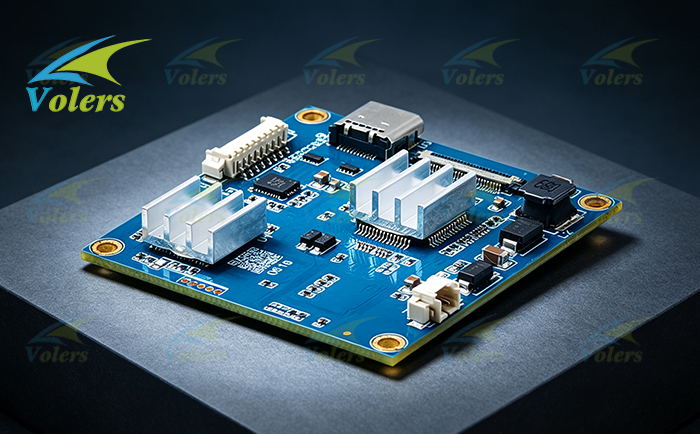
If your needs are rapid on-site verification, laboratory debugging, pre-sales demonstrations, or secondary-development joint debugging, and you want a single encoding control board to handle video conversion, transmission, capture, and control all at once, then the Ruilong Electronic USB Type-C Video Capture Board is a cost-effective tool worth evaluating. However, it is not a universal answer for every scenario: for 4K camera modules, choose the 4K USB Type-C Video Capture Board; for wide-temperature environments, choose the USB3.0 Video Capture Board.
I. Starting from a drone debugging experience
A friend who works on power grid inspection once had to perform pre-flight debugging for a drone equipped with a Sony FCB-EV9520L. His backpack was packed with a 3G-SDI interface board, an SDI capture card, a power supply, and several adapter cables. At the base of a transmission tower, the wind blew and the cables loosened. The image flickered and dropped, and his debugging rhythm was disrupted as well.
This kind of trouble does not occur only in drone scenarios. Doctors watching surgical field images in operating rooms, engineers debugging underwater robots in ship cabins, and university teams verifying autofocus algorithms in laboratories all essentially face the same problem: Sony FCB camera modules offer good imaging performance, but if the debugging tool chain is too long, the interfaces are too scattered, and the drivers are too complicated, efficiency drops significantly.
As a technical engineer who has long worked on secondary development of Sony visible-light camera modules, I am often asked a very practical question: Is there a tool that lets you carry fewer cables, install fewer drivers, and complete image preview, video capture, and camera control with just one laptop, while also being very affordable?
The Ruilong Electronic USB Type-C Video Capture Board was designed around this need. It adopts a domestic integrated-chip solution. The goal is not to pile on hardware, but to integrate encoding, control, and capture into a single control board.
II. Why can it be called cost-effective?
1. Encoding, control, and capture integrated onto one small board
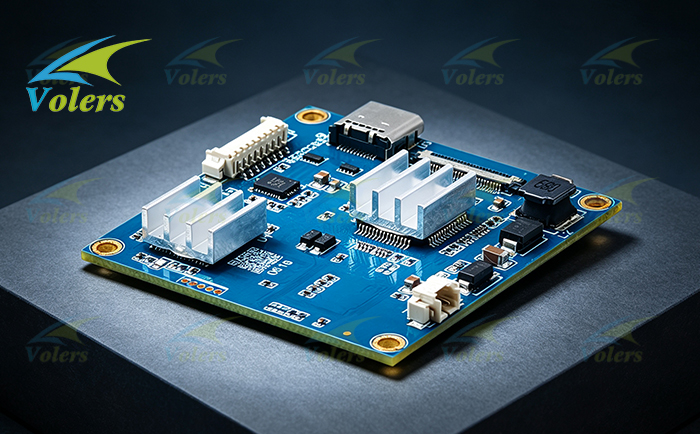
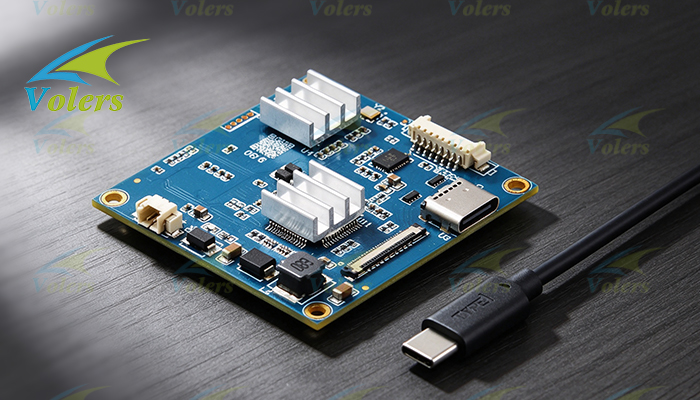
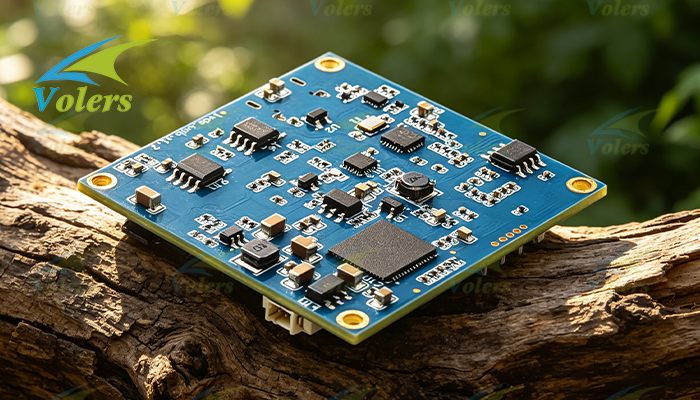
The USB Type-C Video Capture Board integrates video encoding conversion, integrated camera module control, and video capture onto a PCB less than 50 mm in size. During use, you only need a power supply and one USB Type-C cable to connect the Sony integrated camera module to a computer. Then, with power connected, you can achieve 1080P@60fps real-time preview and HD capture. At the same time, commands can be sent through the USB interface’s virtual serial port to adjust zoom, focus, exposure, white balance, and other parameters.
What does this mean? In a traditional debugging chain, video conversion requires an encoding control board, capture requires a capture card, control requires a serial cable, and power must be connected separately. The more cables there are, the higher the probability of poor contact, loose connectors, and on-site wiring chaos. With modular integration, hardware costs decrease, the desktop and backpack are cleaner, and there are fewer potential failure points on site.
2. Driver-free plug-and-play, lowering the configuration threshold
The USB Type-C Video Capture Board uses the standard UVC protocol. It does not require camera drivers on Windows, Mac, or Linux—just plug it in and an image appears. It should be noted that serial port control usually still requires the corresponding chip driver, such as CH340N, but the documentation package includes the driver and instructions. After following the steps to install it, you can use a serial port tool to adjust zoom, focus, white balance, and other parameters.
For R&D debugging, driver-free video output plus a complete documentation package can significantly shorten the time from unboxing to getting an image on screen.
3. Domestic integrated chip + USB3.0 Type-C: a balance between cost and experience
The USB Type-C Video Capture Board uses a domestic integrated-chip solution and adopts the USB3.0 interface standard. While ensuring 5Gbps high-speed transmission and low latency, it keeps the price in a more affordable range, making it friendlier to budget-sensitive debugging engineers. The USB 3.0 Type-C interface supports reversible blind mating, so you do not need to repeatedly check the orientation when plugging and unplugging it in laboratories and outdoor sites.
A common misunderstanding should be clarified here: cost-effectiveness does not mean reduced functionality. What it sacrifices is some long-distance baseband transmission capability in professional fixed-installation scenarios, in exchange for portability, integration, and lower single-point debugging costs. For scenarios aimed at rapid verification, this trade-off is reasonable.
4. Compatibility: Sony FCB HD integrated camera modules and camera modules with comparable LVDS interfaces
The USB Type-C Video Capture Board is not only compatible with Sony FCB HD integrated camera modules. As long as the LVDS interface definitions of third-party HD camera modules match the solution, such as the Tamron MP3010M-EV, they can also connect seamlessly. Application scenarios cover drone aerial imaging transmission debugging, medical endoscope image capture, industrial AOI inspection, security prototype verification, and more.
III. Who is it suitable for, and who is it not suitable for?
1. R&D/debugging engineers: Those who want to quickly verify the imaging and autofocus performance of autofocus cameras, do not want to waste time on wiring, drivers, and capture card configuration, and also want to control procurement costs.
2. Universities/laboratories: For teaching demonstrations of Sony autofocus algorithms. The module is small and portable, plug-and-play with a laptop, and suitable for frequent movement and shared use.
3. Integration providers’ pre-sales teams: For on-site prototype demonstrations for customers. Driver-free video output plus adjustable serial port control can quickly demonstrate camera module capabilities and present a more complete level of professionalism.
Cases requiring alternative solutions:
1. 4K UHD camera module debugging: The USB Type-C Video Capture Board is not suitable for 4K modules. The 4K USB Type-C Video Capture Board should be selected.
2. Low-temperature environments: The USB Type-C Video Capture Board has an operating temperature of -5°C to 60°C. If a lower temperature range is required, the USB3.0 Video Capture Board can be selected, with an operating temperature of -40°C to 75°C.
3. Professional transmission in fixed-installation, long-distance, and high-interference scenarios: The 3G-SDI encoding control board still has clear advantages in coaxial baseband transmission, electromagnetic interference resistance, and long-distance cabling. System determinism should not be sacrificed for portability.
IV. Conclusion
If you work with integrated camera modules year after year and are tired of high capture card prices, complex wiring, poor compatibility between camera modules and systems, and numerous on-site debugging failure points, the Ruilong Electronic USB Type-C Video Capture Board is worth including in your shortlist. Its value does not lie in replacing all debugging tools, but in using the cost-effectiveness of domestic chips, the three-in-one integration of encoding, control, and capture, driver-free operation on mainstream systems, and broad LVDS camera module compatibility to make high-frequency debugging tasks in HD video secondary development lighter, faster, and more cost-effective.
It is not merely a video capture accessory, but an efficiency tool tailored for debugging scenarios in HD video secondary development. As long as the four boundaries—resolution, operating temperature, transmission distance, and interface compatibility—are confirmed in advance during selection, this module can deliver the cost-effectiveness it should in suitable scenarios.
FAQ
Q1: What is the operating temperature range of the USB Type-C Video Capture Board?
A1: The operating temperature range is -5°C to 60°C. If the project requires a wider operating temperature range, the Ruilong Electronic USB3.0 Video Capture Board can be selected, with an operating temperature of up to -40°C to 75°C.
Q2: Is the USB Type-C Video Capture Board suitable for 4K UHD autofocus camera modules?
A2: No. For 4K camera modules, the Ruilong Electronic 4K USB Type-C Video Capture Board should be selected. During selection, it is recommended to first confirm the camera module’s output resolution, LVDS interface definition, and control protocol, and then determine the corresponding module model.
Author
Danny Wong, Co-founder & Chief Technology Officer of Ruilong Electronic, compiled in September 2026.
Shenzhen Ruilong Electronic Information Technology Co.,Ltd., an officially authorized distributor of Sony (China), has 17 years of experience in HD video secondary development and implementation. It has independently developed IP / SDI / HDMI / USB / MIPI multi-type interface encoding control boards, and also provides a DSLR camera network control board compatible with the ILX-LR1. It can provide pre-sales solution consulting, on-site debugging, and after-sales technical support, support connection with Sony's original factory technical resources, and solve project problems on site.ap