 Sony FCB camera block
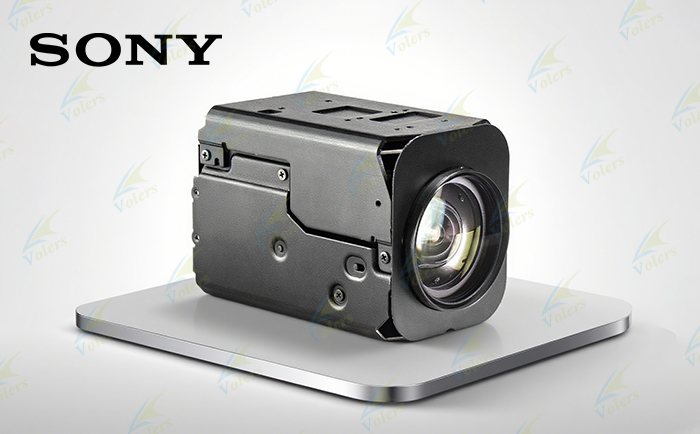
In integration projects such as drone gimbals, surgical field cameras, industrial vision inspection, and robotics, the Sony FCB-EV9520L is a highly recognized 30x zoom integrated camera module. It inherits the mature body structure of the FCB-EV7520 and FCB-CV7520, with fully compatible dimensions and LVDS pin definitions, making direct replacement and upgrading of existing projects convenient. At the same time, it is upgraded to the new-generation STARVIS 2 sensor, further improving low-light imaging capability.
Many integration engineers, when they receive the module, only know the basic parameters: 1/2.8-inch STARVIS 2 CMOS, 2.13 effective megapixels, 1080P@60fps output, and 30x optical zoom.
However, to perform deep tuning, customize image logic, and develop stable drivers, the core reference is the official Sony FCB-EV9520 protocol. This document is not merely a simple parameter table; it contains hundreds of underlying specifications, communication commands, and image control parameters. It is the key to fully understanding the module's performance and avoiding debugging pitfalls.
As an authorized Sony China dealer, our company has 17 years of experience in secondary development of Sony camera modules. Senior Engineer Wang, drawing on extensive project implementation experience, breaks down the complete content and development value of this official protocol manual for readers.
I. What Core Sections Does the Official FCB-EV9520L Protocol Include?
The official Sony FCB-EV9520L technical manual is divided into seven major modules, covering the entire chain from hardware interfacing, communication protocols, and image tuning to risk warnings and copyright licensing. It is a standard reference for the development phase:
- Product function overview
- Usage precautions
- Hardware control interface definitions
- Basic function descriptions and parameter configuration
- VISCA command list (core of development)
- Detailed specification parameter tables and LVDS hardware circuit descriptions
- Copyright and usage license statement
The official Sony FCB-EV9520L protocol document is not merely a manual for reading parameters; it is an engineering document intended for embedded development, hardware interfacing, and image algorithm debugging. The basic function chapter starts from page 7 and extends to around page 30, representing a substantial volume of content.
II. In-Depth Interpretation of Each Section of the Official FCB-EV9520L Protocol
1. Product Function Overview: Core Hardware and ISP Image Processing Capabilities
The Sony FCB-EV9520L is equipped with a 1/2.8-inch STARVIS 2 CMOS image sensor with approximately 2.13 effective megapixels and native support for 1080P 60fps HD output. It has a built-in independent ISP image processing unit, and all image functions can be enabled, disabled, and customized via VISCA commands:
- Multi-level noise reduction (NR), suitable for low-light environments, balancing noise and image clarity
- Wide-D wide dynamic range, VE visual enhancement, and fog penetration/defogging, addressing backlight, foggy, and strong-light scenarios
- New-generation Super+ image stabilizer, with obvious benefits in airborne and mobile inspection scenarios
At the same time, the module's circuit board uses a lead-free and halogen-free design, meeting the environmental compliance requirements of medical and industrial equipment.
2. Usage Precautions: Avoid Hardware and Imaging Abnormalities in Advance
Many debugging faults have their root cause in ignoring the preliminary precautions in the manual. This chapter includes software operation specifications, equipment maintenance requirements, and explanations of inherent CMOS imaging phenomena: white spots, aliasing moiré, inherent lens optical effects, and module mounting and fixing specifications.
Key reminder: Some imaging phenomena caused by the CMOS and lens are inherent characteristics of the components and are not faults. Reading this before development can help avoid misjudging module hardware problems and wasting troubleshooting time.
3. Control Positions and Interface Distinction: LVDS Output Port and Maintenance Port Must Not Be Confused
This is a high-frequency pitfall in hardware interfacing. The manual clearly distinguishes two groups of interfaces: the LVDS image output interface and the module-specific maintenance and debugging interface. For normal integration and development, only the LVDS output interface may be connected. The maintenance interface is for Sony's internal debugging only, and external developers must not connect wiring arbitrarily. Incorrect connection can easily cause module communication abnormalities or even hardware damage. The document also specifies the VISCA serial port level: 3.3V level, maximum withstand voltage 5.5V, and support for multiple baud rates: 9.6k/19.2k/38.4k/115.2k.
4. Basic Function Chapter: Detailed Description of Image Functions and Status Parameters
This is the chapter most frequently used by image tuning engineers and the largest part of the manual. It includes firmware upgrade procedures, vignetting characteristics, spectral response curves, factory default camera configurations, parameter backup and restore, and device status reading. All controllable functions are accompanied by corresponding control commands and parameter value ranges: zoom, focus logic, highlight suppression, multi-mode white balance, auto exposure, exposure compensation, slow AE, backlight compensation, wide dynamic range levels, defogging intensity, noise reduction level, image stabilization switch, optical axis reference, low-light mode, and more.
Developers can customize logic according to industry scenarios, for example: fixed white balance for medical surgical fields, automatic defogging for drone inspection, and disabling auto exposure and locking shutter for industrial inspection.
5. VISCA Command List: The Core Practical Part of Secondary Development
The command list is the top priority of the entire protocol document. All control commands are organized by function, and each command is annotated with: hexadecimal command code, parameter range, ACK response, and completion return status code. There is no need for blind trial and error; control code can be written directly against the document to achieve zoom speed adjustment, focus mode switching, reading the module's current status, and modifying image parameters. At the same time, it distinguishes the response timing of different types of commands, solving common problems such as packet loss and command deadlock during multi-module cascading and high-speed command delivery.
6. Specification Parameter Section: Basis for Hardware Interfacing and Signal Matching
Here there are standardized parameter tables, along with digital output format descriptions: Y/Pb/Pr 4:2:2 digital image output, LVDS pixel data format, and a single-channel LVDS reception reference circuit. Impedance matching and signal routing requirements are also covered in this part. This is the key basis for hardware engineers designing adapter boards and encoder boards. Designing strictly according to the specification can effectively avoid signal problems such as image corruption, intermittent frame drops, and color abnormalities.
7. License Statement: Document Compliance Boundaries
This clarifies the copyright ownership and usage license scope of the original PDF document, standardizing the boundaries for developer use and avoiding copyright risks caused by unauthorized modification or commercial distribution of the document.
III. Development Implementation Support: More Than Just a Manual
The original protocol provides all parameters and commands, but cross-platform drivers, ARM platform adaptation, optimal combinations of image parameters, and multi-device joint debugging still present barriers. Xuanzhan Technology has been deeply engaged in Sony FCB series module development for 17 years. Engineer Wang can provide supporting technical support: VISCA command parsing, image parameter tuning, LVDS adapter board adaptation, and low-level driver debugging, helping projects achieve rapid implementation.
FAQ
Q: Where can the official VISCA protocol manual for the Sony FCB-EV9520L be downloaded?
A: You can visit the Sony China professional products official website or the official website of a Sony authorized dealer, search for FCB-EV9520L, and go to the document download section on the product detail page to obtain the original PDF.
Q: Is there a Chinese version of the FCB-EV9520L protocol document?
A: The technical manuals and specification sheets released by Sony are all in English, and there is currently no official Chinese translation.
Note: The content is excerpted from the Sony FCB-EV9520L technical manual PDF file.