In the pathology department of a hospital, a case biopsy slide carries crucial diagnostic information. Traditional pathological analysis relies on microscopic visual examination, but in the face of complex cases and the need for remote consultations, digital pathological analysis has become an inevitable trend in modern medicine.
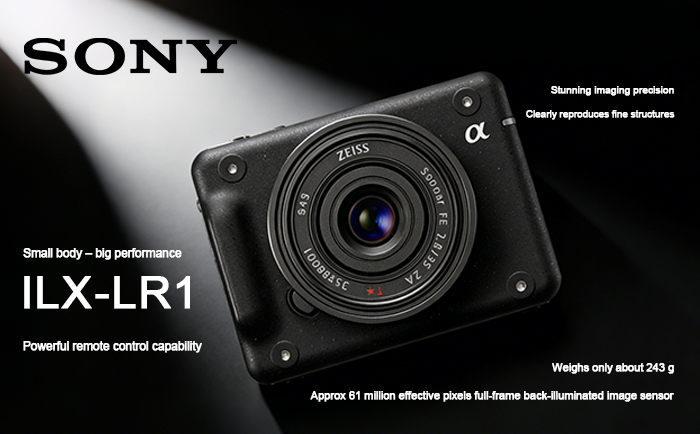
The launch of the Sony full-frame expandable system remote control camera ILX-LR1 is bringing a revolutionary breakthrough to the digitization of case slices. This lightweight device, weighing only 243 grams, features a full-frame back-illuminated image sensor with approximately 61 million effective pixels, setting a new standard for the digitization of pathological slices.
Sony ILX-LR1 Full-frame Camera, 61 Mega pixels unlock new dimensions for pathological analysis-1
I. Challenges and Requirements of Digitalization of Pathology Slides
Pathology slides contain a wealth of crucial information. Although traditional slides only require storage at room temperature, they need a long-term preservation period of 15 to 30 years, and the borrowing and consultation processes are cumbersome. Digitalization of slides not only addresses these issues but also facilitates remote consultations and AI-assisted diagnosis.
Achieving high-quality digitalization of slices is no easy task: it requires extremely high image resolution to capture cellular-level details, precise color reproduction to ensure diagnostic accuracy, and an efficient workflow to handle the demands of processing a large number of slices. This is precisely where the ILX-LR1 comes into its own.
II. Sony ILX-LR1: Small Body, Big Performance
1. Remarkable Image Quality
The Sony ILX-LR1 is equipped with a 61 million effective pixels full-frame back-illuminated image sensor, combined with the advanced BIONZ XR image processor. The processing performance has been enhanced by approximately 8 times, significantly reducing processing latency.
This means that every cellular structure and subtle difference in staining in the pathological slides can be clearly captured, providing the pathologists with more comprehensive diagnostic information.

Sony ILX-LR1 Full-frame Camera, 61 Mega pixels unlock new dimensions for pathological analysis-2
2. Specifically designed for integrated applications
Unlike traditional cameras, the
ILX-LR1 adopts a compact box-like design (approximately 100mm wide × 74mm high × 42.5mm deep), and weighs only about 243 grams (excluding the display, viewfinder and battery).
All six sides are equipped with M3 screw holes, which can be flexibly integrated into various digital scanning devices, providing great convenience for the digital system of pathological sections.
3. Powerful remote control capability
With the Sony Camera Remote SDK, the ILX-LR1 can perform remote parameter adjustments, shutter release, and real-time scene monitoring. This is crucial for laboratories that need to process slices in batches. The staff can complete high-quality image acquisition without frequently operating the camera.
III. Core Advantages of ILX-LR1 in Case Slice Analysis
1. Clear Presentation of Fine Structures
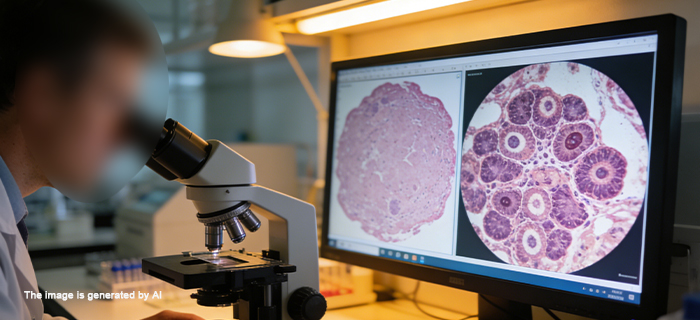
The 61 million pixel high resolution means that a single image can contain more details. Pathologists can clearly observe microscopic structures such as cell morphology and arrangement even after image magnification, and subtle lesions can also be accurately identified.
For immunohistochemical sections, this high-level imaging capability is even more crucial, as it helps to detect minute abnormal changes.
2. Enhancing diagnostic efficiency and consistency
Traditional microscopic examinations rely on the doctor's experience and the current state, which may lead to subjective differences. The digital images provided by ILX-LR1 can be stored and repeatedly measured, providing an objective basis for diagnosis.
High-resolution images also offer more detailed information to the AI-assisted diagnostic algorithms, enabling the algorithms to more accurately identify the characteristics of the lesions.
3. Support for remote collaboration and education
The remote control capability of ILX-LR1, combined with the real-time framing function, enables experts to provide remote guidance and consultations. This not only enhances the efficiency of medical resource utilization but also offers high-quality visual materials for medical education.
Sony ILX-LR1 Full-frame Camera, 61 Mega pixels unlock new dimensions for pathological analysis-3
IV. Practical Application Scenarios
1. Routine Pathological Diagnosis
In routine pathological work, ILX-LR1 can be integrated into the automatic scanning platform to quickly complete the digitization of a large number of slides. Its high imaging quality and low noise characteristics ensure that the digitized images accurately represent the original slice information.
2. Consultation of Difficult Cases
When dealing with complex cases, multiple experts often need to jointly discuss. The remote control function of ILX-LR1 facilitates experts from different locations to observe the same case, thereby enhancing the efficiency and accuracy of the consultation.
3. Medical Education and Research
High-definition slice images are valuable resources for medical education and research. The image quality provided by ILX-LR1 is sufficient to meet the requirements for high-quality publications and the production of teaching materials.
In the future, by integrating 5G networks and AI technologies, pathological diagnosis is expected to achieve greater breakthroughs. The open SDK and strong compatibility of ILX-LR1 provide a solid foundation for system integration and functional expansion.
Conclusion
Although the Sony ILX-LR1 was initially designed for industrial applications and drones, its high resolution, lightweight design and remote control features precisely meet the core requirements of digitalization of pathological specimen slices. As a bridge between pathologists and advanced imaging technologies, the ILX-LR1 is helping the medical community capture more microscopic details, providing strong support for the development of precision medicine.
 Sony FCB camera block