
 Sony FCB camera block
In medical documentation, teaching, and teleconsultation, gross pathology cameras play a critical role. One of their core requirements is not simply clarity, but the most accurate possible reproduction of tissue specimen color. Unlike ordinary photography, the color of gross pathology specimens may itself carry diagnostic clues: pale mucosa, dark red hemorrhagic foci, yellow staining of jaundiced tissue—these subtle color differences may affect the observer’s judgment of the nature of the lesion.
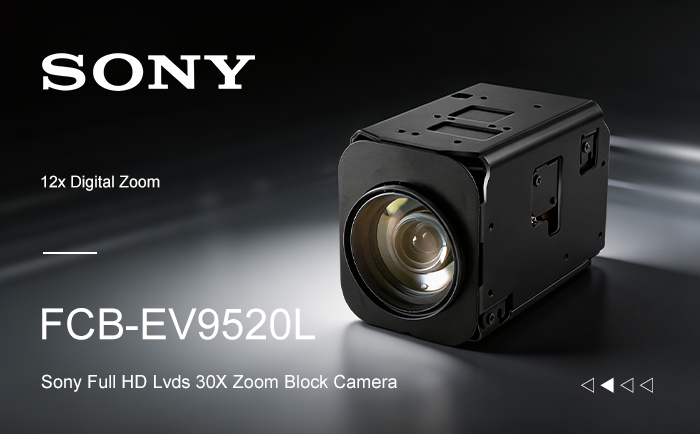
Sony Lvds 30x Zoom Block Camera
Therefore, for pathology departments, choosing a camera with reliable color reproduction is not an optional enhancement but a basic guarantee of daily imaging quality. So, can Sony’s starlight-grade integrated camera module FCB-EV9520L handle this task? As an officially authorized distributor of Sony (China), Ruiloog Electronic analyzes this from three levels: technical basis, conditions of use, and scenario limitations.
First, from the perspective of color science, where does the difficulty in pathology imaging lie?
Whether color reproduction is true essentially depends on three links: the spectral characteristics of the light source, the sensor’s ability to respond to spectrum, and the interpretation and reconstruction of color information in image signal processing.
Gross pathology photography usually uses white light illumination with a high color rendering index (CRI) to ensure that specimen colors are not significantly distorted at the light source level. Even so, different tissues differ greatly in their spectral reflectance. Adipose tissue is slightly yellowish, muscle is deep red, and necrotic areas may appear grayish-green. All these require the imaging system to have sufficient headroom in dynamic range and color depth; otherwise, highlight clipping or loss of shadow detail can easily occur, leading to color shift.
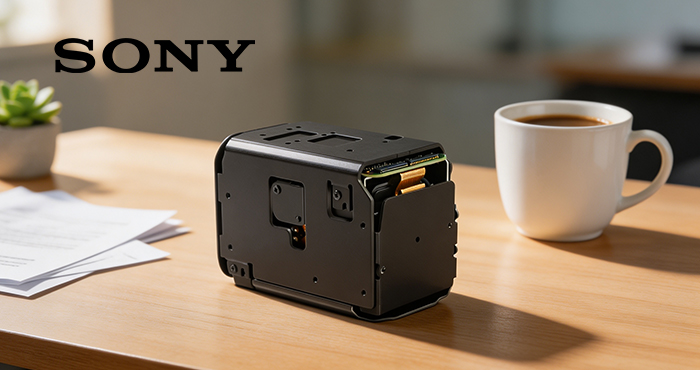
FCB-EV9520L
Second, from the perspective of technical specifications, what capability foundation does FCB-EV9520L have?
Sony FCB-EV9520L adopts a 1/2.8-inch STARVIS 2 CMOS sensor, with approximately 2.13 million effective pixels, and supports 30x optical zoom.
In terms of color processing, the Sony FCB-EV9520L camera module has a built-in Sony automatic white balance algorithm system and provides multiple white balance modes, including auto, indoor, outdoor, and one-push white balance. This means that under fixed light source conditions, users can calibrate the color reference to a state close to reality through manual white balance calibration. In addition, FCB-EV9520L supports wide dynamic range, which helps retain more level information when specimen brightness contrast is strong. [1]
Third, from the perspective of application scenarios, there are still some limitations.
Gross pathology photography is usually completed at a fixed workstation, and lighting conditions are relatively controllable, which provides a favorable premise for FCB-EV9520L to exert its color potential. However, in practical applications, several factors still need attention.
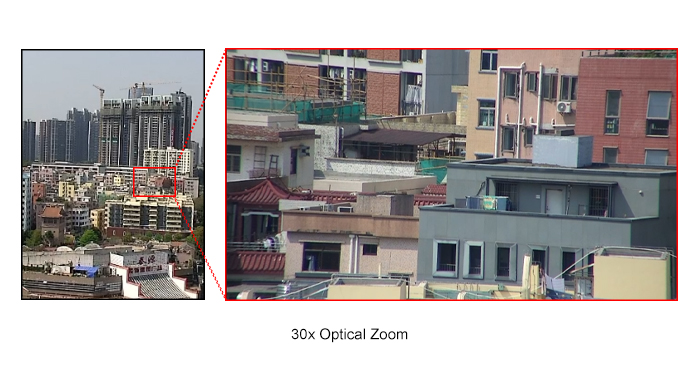
Sony FCB-EV9520L 30x Zoom Test Result
First, automatic white balance may deviate in complex color temperature environments. It is recommended to use manual white balance under a fixed light source and calibrate regularly. Second, the display and storage stages after image output also affect the final color perception. If the display terminal is not calibrated, even if the front-end acquisition is accurate, the color seen by the observer may still deviate from reality. In addition, different pathology departments do not have exactly the same understanding of true color reproduction: some value an overall natural tone, while others pay more attention to the discernibility of specific color differences. This difference in requirements will also affect the evaluation of device performance.
Conclusion
Back to the original question: Can Sony FCB-EV9520L meet the true color reproduction requirements of gross pathology cameras?
The answer is: conditionally yes.
FCB-EV9520L has the technical foundation to support gross pathology photography in terms of sensor quality, white balance adjustment capability, and dynamic range performance. Under the premise of a controllable light source, proper parameter settings, and a standardized color management workflow, its color reproduction can meet the needs of most pathology documentation and teaching scenarios.
FAQ
Q: When Sony FCB-EV9520L is used for gross pathology photography, can automatic white balance be used directly?
A: It is not recommended to rely on auto or ATW (Auto Tracking White Balance) for a long time. Gross specimens vary greatly in color, and automatic mode will drift in color temperature as specimen content changes, resulting in inconsistent colors among specimens captured before and after. It is recommended to use a gray card to perform One Push white balance and lock the white balance parameters to ensure color consistency for each specimen.
References
[1]
FCB-EV9520L FHD 30x Zoom Camera Block
https://pro.sony/ue_US/products/zoom-camera-blocks/fcb-ev9520l